When Your Portfolio Bleeds Red: The Hidden Reason Aussie Crypto Gamblers Bet More During a Bitcoin Crash

Bitcoin drops 20% in a week. Your portfolio, which was looking healthy not long ago, is now firmly in the red. So what do you do? If you're like a surprising number of Australian crypto gamblers, the answer is: open up your favourite Bitcoin casino and start playing harder.
It sounds counterintuitive. Logically, a shrinking bankroll should mean pulling back, not doubling down. But the data—and the psychology behind it—tells a very different story. There's a specific emotional trap that catches crypto-holding players during market downturns, and it's worth understanding before you find yourself stuck in it.
The Loss Aversion Loop You Didn't Know You Were In
Behavioural economists have known for decades that humans feel losses roughly twice as intensely as they feel equivalent gains. This is called loss aversion, and it was famously documented by Daniel Kahneman and Amos Tversky in their work on prospect theory. In plain terms: losing $500 hurts a lot more than winning $500 feels good.
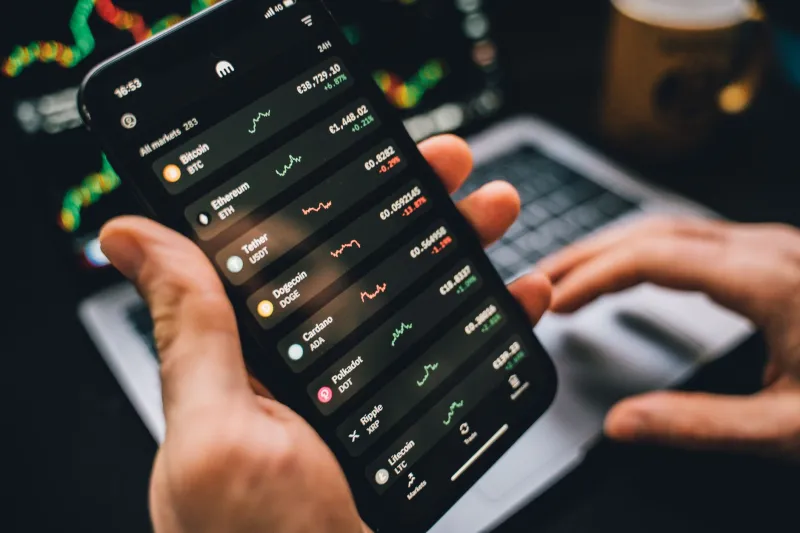
Now layer that on top of watching your Bitcoin holdings drop in real time. Every refresh of your portfolio app delivers another small psychological blow. The brain, wired to escape discomfort, starts looking for a quick reversal—something that can flip the emotional script fast.
For someone who already gambles at crypto casinos, that outlet is sitting right there. A few good spins, a decent blackjack run, a lucky hand of poker—and suddenly the narrative changes from "I'm losing" to "I'm winning back." The casino becomes an emotional pressure valve, not a strategic choice.
The problem? The two losses—portfolio and casino—don't cancel each other out. They compound.
The "Recoup" Fallacy: Why the Maths Doesn't Work the Way Your Brain Thinks It Does
Here's the specific false logic that trips up a lot of Aussie players during a market crash: if I win at the casino, I can offset what I've lost on Bitcoin.
On the surface, this feels rational. Money is money, right? If BTC drops and you're down $1,000 in portfolio value, winning $1,000 at a crypto casino seems like it gets you back to even.
But this reasoning ignores a few uncomfortable truths.
First, casino games carry a house edge. That means over enough sessions, the expected outcome is a net loss—not a net gain. You're not entering a neutral contest where you have a 50/50 shot at recouping your losses. You're entering one where the maths is already tilted against you.
Second, the emotional state you're in during a market crash is precisely the worst headspace for making good gambling decisions. Anxiety, urgency, and the desperate need to "fix" something all lead to bigger bets, longer sessions, and less disciplined bankroll management.
Third—and this one stings—if your crypto holdings are down, your actual purchasing power has dropped too. You're not gambling with the same resources you had before the crash. You're gambling with less, under more stress, with more to lose.
Market Panic Is a Gambling Trigger Nobody Talks About
Most problem gambling research focuses on the usual suspects: boredom, social pressure, chasing a previous loss from a gambling session itself. But for crypto casino players, there's an entirely separate trigger category that rarely gets discussed: market volatility.
A sharp BTC price drop creates a psychological state that mimics the aftermath of a bad gambling session. There's the same sick feeling, the same sense of helplessness, the same urge to "do something" to make it stop. And if you've previously found relief at a casino—even temporarily—your brain will start connecting those dots.
This is sometimes called a cross-behavioural trigger. The market event activates the same emotional circuitry as a gambling loss, which in turn activates the gambling impulse. For Aussie players who are both crypto investors and casino regulars, this creates a feedback loop that can be genuinely difficult to break.
Recognising that the market is triggering the urge—not some rational assessment of casino strategy—is the first step toward breaking the cycle.
What Smart Crypto Casino Players Actually Do When BTC Tanks
None of this means you have to stop playing entirely when the market turns south. But the players who stay ahead over the long run tend to follow a few principles that are worth borrowing.
They separate the two accounts mentally—and physically. Your crypto casino bankroll is not your investment portfolio. They should be tracked separately, stored separately, and thought about separately. When BTC drops, that's an investment event. It has nothing to do with your casino budget unless you deliberately make it so.
They set session limits before the market opens, not during a crash. Decisions made under emotional duress are almost always worse than decisions made in advance. If you've already committed to a maximum session spend before the volatility hits, you're far less likely to breach it when panic sets in.
They recognise the urge for what it is. Feeling the pull to play more after checking your portfolio? That's a signal to pause, not proceed. Some players literally use a rule: if I'm checking crypto prices more than twice an hour, I don't open the casino that day.
They zoom out on the portfolio. Bitcoin has historically recovered from significant drawdowns—multiple times. The Aussie crypto community has been through enough cycles to know that panic-selling (or panic-gambling) during a dip is usually something people regret. A longer time horizon on your investments makes each individual price movement feel less catastrophic.
The Real Cost of Confusing Two Very Different Games
Investing in cryptocurrency and gambling at a Bitcoin casino are both activities that involve risk and reward. But they operate on completely different timeframes, mechanics, and logic. Treating them as interchangeable—or worse, using one to compensate for the other—is where a lot of Aussie players quietly start losing serious ground.
The crypto market doesn't care about your casino losses. The casino doesn't care about your portfolio. And your emotional brain, unfortunately, doesn't always understand the difference between the two.
The players who do best over time are the ones who can hold that distinction clearly, even when everything feels like it's going sideways at once. Especially then.
If you're finding that a red portfolio is your most reliable prompt to open a casino app, that's worth sitting with. Not as a judgement—just as information. Because the trap isn't obvious when you're in it. It rarely is.